
Journal Detail back to listing
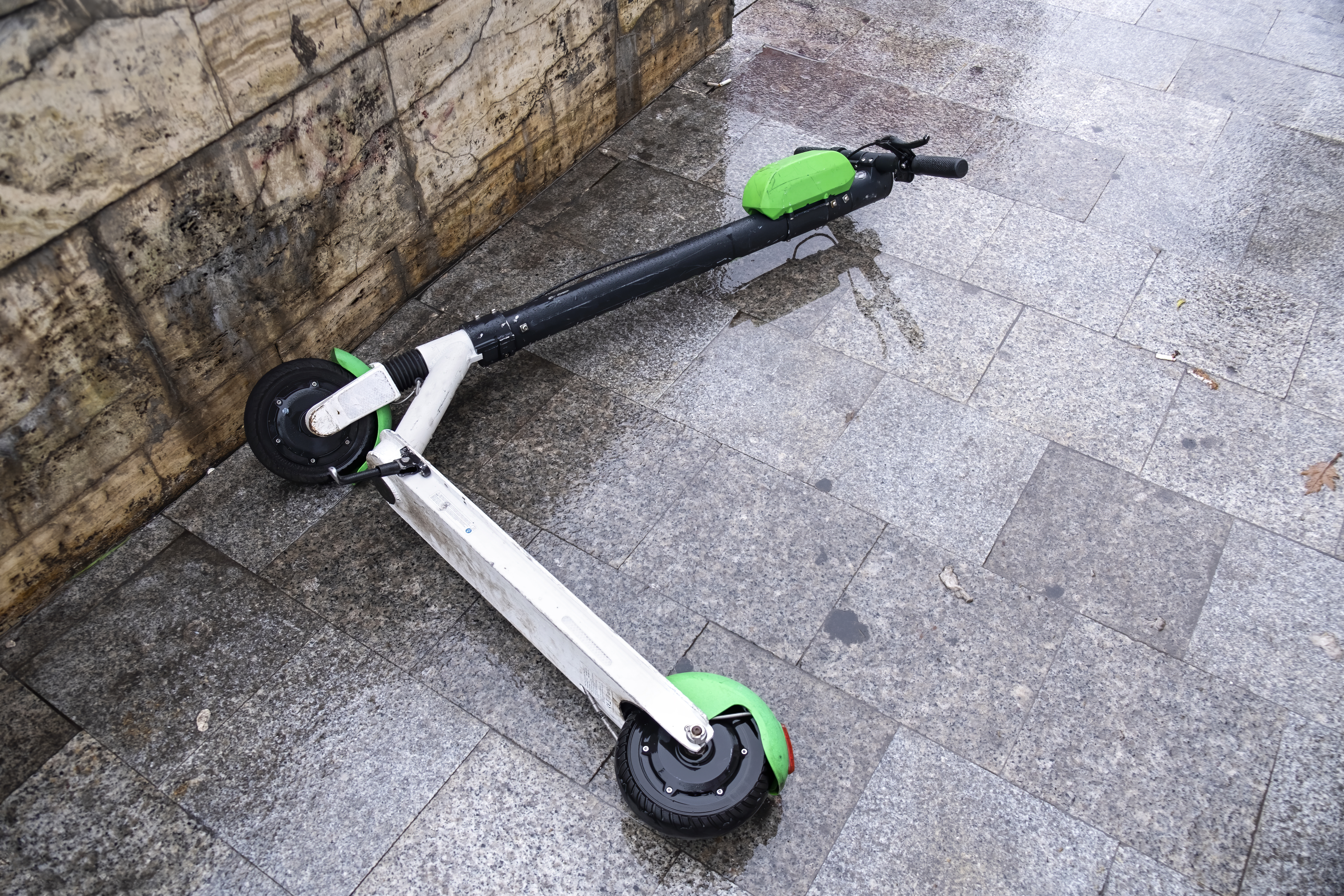
Series of 12 Claimants: Pedestrian versus Car/E-Scooter
- Oct 14, 2026
- Latest Journal
by Mr Nicholas A Jacobs.
• 11 claimants were knocked down by a car
• 1 claimant was knocked down by an e-scooter
• 7 males aged 23 to 88
- In this group there are 3 under 75 and 4 over 75
• 5 females aged 28 to 55
Circumstances of accident
• 4 claimants were on a pedestrian crossing and hit by a car
- 1 car did not stop at the scene of the accident
• 1 claimant was hit by an e-scooter
- The e-scooter did not stop at the scene of the accident
• 7 claimants were hit crossing the road not on a pedestrian crossing
- 4 cars did not stop at the scene of the accident
Head injuries
• 9 claimants lost consciousness
• 4 claimants sustained facial fractures, two of whom also had a skull fracture.
• 7 claimants sustained facial lacerations
• 4 claimants had difficulties with balance
• 2 claimants suffered memory problems
• 1 claimant suffered hearing problems
Other injuries apart from head injury
10 claimants sustained musculoskeletal problems of varying degrees, two of which were severe
Claimants sustained lacerations on other parts of the body as well as on the face
Psychological difficulties
9 claimants had psychological difficulties, both immediately after the accident and continuing.
These included anxiety, depression, and PTSD symptoms
Eye problems
• 9 claimants suffered from eye problems
• 6 claimants had visual field loss
- 3 with visual field loss secondary to optic nerve injury [Figure 1]
- 3 claimants had visual field loss which was non-organic [Figure 2] - two of whom had functional visual loss and one was thought to be malingering
• 6 claimants had reduction in visual acuity
• Visual acuities ranged from 6/6 to 6/18 in all the groups at the time of my examination
- 3 claimants had organic reduction of visual acuity as a result of the index accident
- 3 claimants had non-organic functional, reduced visual acuity, one of whom was thought to be malingering
• 1 claimant had a posterior vitreous detachment as a result of the index accident
• 1 claimant had inferior orbital nerve damage resulting in numbness of the cheek
• 4 claimants reported photophobia
Discussion
This is a skewed series because I am an ophthalmologist and the cases were referred due to
eye concerns.
In the circumstances of these accidents, I note that of 12 vehicles, 6 did not stop at the scene of the accident. In addition, 4 of the injuries were sustained on a pedestrian crossing. These findings are rather shocking.
There were three claimants who did not have any continuing eye problems, but were referred for an examination because they had sustained bruising around the eye at the time of the index injury.
The demographics show a fairly even spread of male and female, but there is a specific group of four males aged over 75.
There were various systemic injuries, physical injuries, such as fractured ribs, fractured femur, middle ear damage, odontoid fracture, and a lot of psychological injury as well, particularly PTSD, and anxiety and depression.
Amongst head injuries, there were nine head injuries, including with four facial fractures,
including two skull fractures. Amongst these, there were three intracranial bleed episodes. This shows that these injuries are not trivial by any means.
With regard specifically to eye injuries three claimants had visual field defects related to optic
nerve injury. These optic nerve injuries may or may not have shown a change of the optic disc on
examination of the eye. The optic nerve appears to be vulnerable in head injuries, but the colour
or relative colour of the optic disc is not a reliable indicator.
Photophobia is something which is reported very often to me, usually following a head injury, and
can take much longer than expected to recover. It will not normally be related to a direct damage to the eye itself. However, in cases where there is an insult to the cornea, such as a chemical eye injury, photophobia will be seen. I was actually surprised to find this symptom in less than 50% of patients in this particular series.
As far as functional problems go, whether it is hysterical conversion type reaction or malingering,
this is something we always have to bear in mind. There were three examples of visual field abnormality and three examples of visual acuity reduction.
Patients with functional changes or who are malingering will exaggerate visual loss or have variable visual loss. This is something that did show up in this series.
Memory loss was noted in two claimants and there was one case in particular where it really has been life-changing. For instance, I was told on noting a spider in a room the claimant went to find a brush and pan to remove it but then as soon as the brush and pan had been picked up the claimant had forgotten which room the spider was in. The claimant now has to write everything down. The claimant keeps misplacing things like a watch or a ring.
There were no claimants who had severely reduced visual acuity as a result of the index accident.
Recommendations
In my opinion all claimants with a head injury should have a routine Humphrey 24 2 sita standard visual field examination